San Francisco
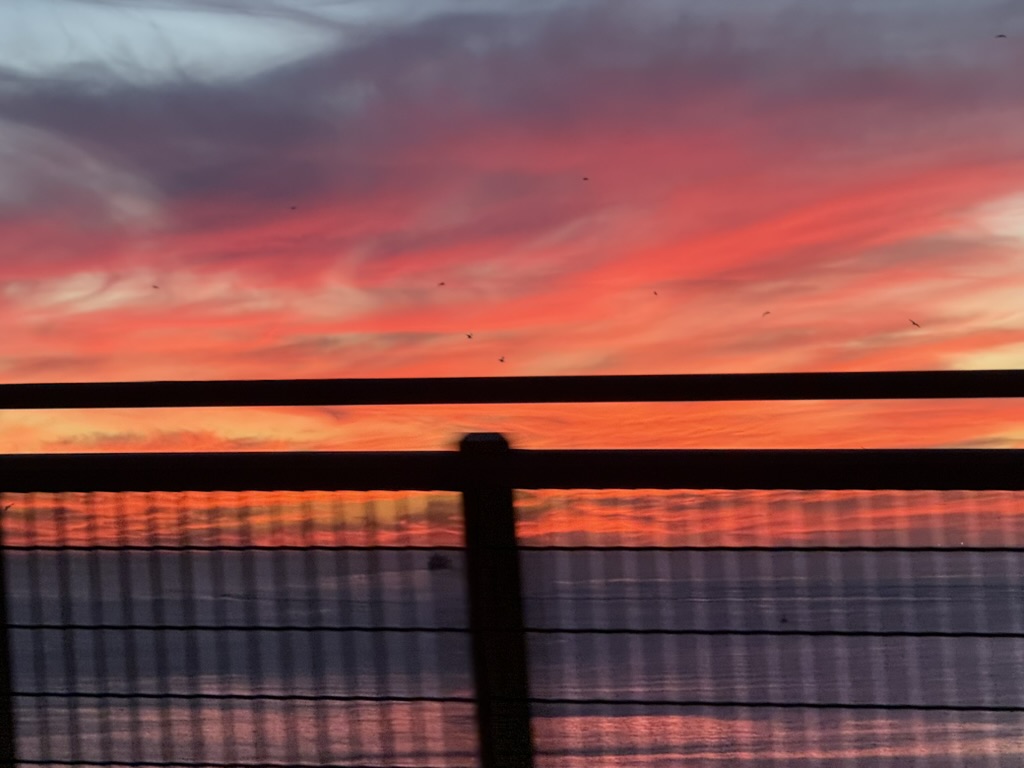
When you first arrive in San Francisco, there are many things you notice. Perhaps the first are the colours. It seems trite to say that a city is full of colour, but it really is true here in a way it isn’t anywhere else in the world (at least, anywhere that I’ve been). There’s the lilac of the jacarandas (like Paddington). There’s that weird house on the corner that is both turquoise and brown. There’s the ocean that slides between deep blue and golden yellow depending on what time of day I look at it from the shower. There’s a red, a calm red, looking out over the Pacific from Baker Beach at sunset. I’ve never seen a city hold so much colour without bursting.
San Francisco, without you in it, is a remarkably flawed and empty place. But having moved here last year, I want to try and say what I think it does have, and what it’s done for me.
I think the remarkable thing about holding all these colours is that San Francisco holds fragments of wherever you’ve come from. It is a palimpsest city. A stodgy blanket wrapping the disjointed patches of all the lives that amalgamated in this city; a city that, perhaps unfairly, is often viewed as a sterilised condensation of homogenised AI tech bros. When I sit and watch the NFL at McGarry’s in North Beach sipping a Guinness, San Francisco is Jack Duggans in Bathurst (an institution my brother has been banned from on multiple occasions). When I squint and look at Point Diablo and its rocky silhouette in twilight shivers, it’s County Mayo in Ireland on a rare cloudless evening. When I wake up in the morning on my side and see only the blue of the ocean out my window, and maybe a couple of drifting sailboats, it’s my Yaya’s house in Palm Beach.
I think most people who uproot their lives and move cities do so because they’re looking for a way to remove themselves from the missing parts of wherever they came from. San Francisco, I’ve realised, is only that on the surface. Really, its beauty is that people bring these other places with them, in a way I don’t feel in New York or London or even back home in Australia. This place breathes with the tide of everything that washes in.
But the tide goes both ways. People come to San Francisco, which means people leave somewhere in order to come. And leaving means goodbyes. To places. To people. And it’s so sad saying goodbye over and over. Sometimes I stand at the end of a goodbye and I can’t move.
I think about this sometimes. The specific confluence of yeses that put me in that room on that night. The flight I nearly missed. The city I nearly didn’t move to. The invitation I nearly ignored because I was tired. Or worse, the invitation I accepted, and the person I didn’t meet because I wasn’t in Aisle 8 of Woolworths at 7:30pm on a Saturday. They’re out there, those other versions, living their lives. They don’t miss this person because they never met them. They don’t know there’s anything to miss.
That’s the part that gets me. Not the loss; I can handle loss. It’s the recognition that the loss was never guaranteed. That I could have been one of the ones who never had it. That most versions of me, probably, are exactly that: people who never had it and never knew to grieve it.
But I had it.
So when I say a goodbye means something, I don’t mean it hurts. I mean I can feel the weight of all those other lives pressed up against this one. All those empty rooms where I never met them. And this room, about to pack my bags for San Francisco, where I did.
I don’t know what calculus put me here instead of there. I don’t know if I’m the lucky one or if luck has nothing to do with it. I don’t know what I’ve lost by being in this timeline instead of another—what people I’d have loved, what versions of myself I’d have become. That uncertainty never closes.
But in this life, the one I actually got, I met this particular person I’m now saying goodbye to. And the gratitude isn’t what comes after the grief. It’s underneath it. It’s what the grief is made of.
I don’t need it to make sense. Sometimes (not always, but sometimes) I don’t even need the feeling to justify itself. It’s enough to stand here, holding what I got, knowing most of me never got it at all.
Sometimes the gratitude doesn’t require consumption. The meaning is not in the feeling itself, but in the cosmic accident that I get to be the one who feels it.
San Francisco forced my hand in grappling with this. People come here searching for gold, and coming means leaving, and leaving means learning what it costs to have had something worth leaving. But just as leaving induces goodbyes, arrival induces the possibility of return. To paraphrase Cavafy:
San Francisco gave you the marvellous journey.
Without her you wouldn’t have set out.
She has nothing left to give you now.
And if you find her poor, San Francisco won’t have fooled you.
Wise as you will have become, so full of experience,
you’ll have understood by then what these Ithakas mean.
Better if the journey lasts for years, so you’re old by the time you leave the island, wealthy with all you’ve gained along the way, not expecting San Francisco to make you rich. And you will one day go home, back to Jack Duggans, and it will not be the same Guinness, nor will you be the same person. But the place will remember you, and you will remember San Francisco, and you will be grateful.